Thursday, July 20, 2017

Creating A Thriving Culture

In 1998, a huge study of current American culture showed that there was a new and growing segment of society that has been moving in a new direction since the 1960's. In the direction of increasing equality,  racial and spiritual diversity,  and more concern about our environment. The authors of this study, Paul Ray and Sherry Ruth Anderson, labeled this new piece of the cultural pie Cultural Creatives(CC's) and published their findings and commentary in a 2000 book called, simply: "The Cultural Creatives."

These CC's have views that are in contrast to other parts of our culture that the authors called Moderns(the largest segment of the population who get the most attention in the media) and Traditionals (with more conservative, "fundamental" values). Since this blog is mostly about CC's, I won't go into a description of the other groups. Cultural Creatives are not some fringe of society. Ray and Anderson found CC's in all economic groups, all racial and age groups, and in countries around the world!

CC's want authenticity in their interactions, like a holistic/systems overview, are "foodies,"
use alternative health care and appreciate established neighborhoods "with a lot of trees and privacy."
There is a general view of "think globally, act locally" to make the world a better place.
Recently retired President Obama and  First Lady Michelle can be listed as maybe the most famous and influential Cultural Creatives. They worked hard to enhance the health and well being of Americans over their 8 years in the White House. Especially by supporting health, environmental, equality and family issues.

The proportion of Cultural Creatives in American society has grown rapidly since the 1970's. It is close to 30% of adults and still growing. The odd thing about this group is that it is largely unaware of itself!! Since there is only minor media attention payed to the activities and philosophies of this group, they think that they are alone or in a minority of their own culture. I believe this is changing with the wide use of the Internet, but it still is true in large part. So, if you see yourself as a Cultural Creative or would like to move in that direction, join in on some of the activities is your local area that seem to help move your community in the direction that I've described. Reach out to other CC's to make sure to make connections and get creative!


Wednesday, October 19, 2016

Featured Quality Website:

NEW ROAD MAP FOUNDATION - Building your financial foundation

The New Roadmap(NRM) Foundation was created in 1984 and came out of insights about taking control of your money that became the book "You Money Or Your Life," co-authored by Joe Dominguez and Vikki Robin in 1992. It centers around values of frugality and financial integrity that led both of the authors to financial independence at an early age. The book was a New York Times bestseller and continues to sell well and inspire new generations.  At the core of New Road Map's educational work is a nine step program for financial intelligence, integrity and independence created by Dominguez.

NRM has developed a guide to the core of the nine step program that can be used for both individual self-guided learning as well as in educational settings. Program adherents who wish to teach others this rewarding practice of personal economics have access to a professionally developed curriculum to do so. This suite of products is the Financial Integrity Program.

NRM has dedicated its resources to making this core material available free of charge to individuals and to organizations who are dedicated to spreading the Financial Integrity approach far and wide.

As a financial foundation to work from and build your personal financial integrity, these materials are excellent AND they are, amazingly, free! Please visit their website:

http://www.financialintegrity.org/index.php?title=About_the_New_Road_Map_Foundation


Monday, September 12, 2016

GETTING REAL                                                                                                   Summer 2016                                                              
   
     Living an "authentic life" has been getting more and more press and attention as the New Millennium moves forward. But just what does it mean to lead a life of authenticity? Aren't we all doing our best to be who we think we are? Possibly not. As one of the women interviewed for my "Quality of Life Workbook" stated: " I never felt I was doing MY work---the work for which I was born. I always felt that I was fulfilling someone else's agenda. Getting real is following your OWN path and not allowing anyone else's agenda to get in your way! There is a fine line between fear and truth....when you are living your truth, you have NOTHING to fear."
     One of the more eloquent and deep thinkers on the topic of authenticity and "getting real" is author Charlene Stretnak. She is author of the acclaimed book "Resurgence Of The Real."
Her assessment of our modern life is insightful: "We are told that the world is shrinking, that vast distance has been conquered by computer and fax, and that the earth is now a "global village" in which all of us are connected as never before. It feels, however, quite the opposite. It feels as if distancing and disconnection are shaping modern life. If anything is shrinking, it is the fullness of being now experienced by the modern self." This is a sad but realistic commentary on what many of us have accepted as "how it should be."
     In survey after survey, we are shown that Americans are working more but enjoying it less --- even those at the top of the financial ladder. Current political and economic policy seem to be taking note of this. Achieving some kind of improvement in working conditions and wages is on the agenda of both parties in 2016. Being allowed to work less, as it appears most people would like to do,  would give us more time for quality of life (qol) pursuits. Many people across the globe are saying that top of this list is more time with friends and family and more depth in these relationships gives a much higher life quality!
     In the best book I've found on how to achieve more depth in relationships and LIFE is Susan Campbell, Ph.D.'s "Getting Real." She goes through 10 truth skills you need to live an authentic life.
Chief among them are:

1. Experiencing "what is."
Being in the moment. Feeling what is going on in BOTH body and mind to make up an emotion and then expressing it honestly so that you and the other person have a clear understanding of what makes us tick.

2. Being transparent.
Self-disclosure. Telling the truth about who you are. Campbell states: "When you share your thoughts, sensations, feelings, even your judgements "in the interest of transparency," you are less apt to get caught up in the illusion of control." Trying to control the conversation or anothers' actions is one of the big downfalls in relationships. Transparency can be scary, but ultimately rewarding in added depth.

3. Noticing your intention.
Do you REALLY want to communicate or control? Generally intention should be to get clearer, get closer, and be more effective. Unfortunately there are often hidden agendas. Clarity of purpose and honesty are essential.

4. Welcoming feedback.
Getting feedback keeps the two way flow of communication going. Feedback should be given in as kind a manner as possible. Unfortunately most feedback seems to be negative. Try hard to add in some positive feedback with the negative. Let people regularly know what you LIKED about what they did or said!

These are the top 4 of Dr. Campbell's skills to get real. Start with these and get a copy of her book to go deeper into these important life skills.

Sunday, September 6, 2015

PEACE AND GRATITUDE

   Later in September there is a dynamic day where an International Day of Peace comes on the same day as World Gratitude Day. Sounds like a great time to get together and talk about creating a world where there's lots more of both of these! Unfortunately it's a Monday: September 21st. But let's not let this be an impediment. I plan to do something to celebrate both of these important holidays on Sunday the 20th. Get a head start on peaceful gratitude!!
   I've regularly ended the day by myself or with my young son by thinking/talking about what we were most grateful for that particular day or week. Living with a sense of gratitude is one of the most life affirming ways to happiness that I've ever found. Even when I didn't have much material wealth or much to be grateful for. I could always find something that would give me some joy or hope.
   The idea of World Gratitude Day is to foster “an attitude of gratitude” in people so that they appreciate and return all the favors and good deeds that people have done for them.  It could be something as simple as a thank you note or a certificate for people’s contributions.
   If you haven't seen the movie "Pay It Forward" starring Kevin Spacey and Helen Hunt, please do, as it's a beautiful concept and is VERY appropriate to an attitude of gratitude. In the film, Helen Hunt's character's son is Trevor, a junior high school student. He thought up a social studies project where he teaches people the gratitude concept to "pay it forward." If someone does a favor that really helps you, you are supposed to ask them not to pay it BACK, but to pay it FORWARD to three more people, thus exponentially spreading kindness and decency out into the world in a tidal wave. A beautiful idea and one to emulate if we can keep it in the forefront of our regular routines!

Sunday, August 10, 2014

BUILDING A GOOD LIFE IN THE DIGITAL AGE - 5 KEYS

Distractions, distractions, they're not constructive actions
Some can be fun, like opposite attractions,
but most are a waste like TV and addictions,
leading us to a world of living major fictions.

The distractions of life in the 21st Century are endless…We are ALL attention deficit !! Having a phone/computer in our pocket 24/7 doesn't help, and add to this the fact that many of these "phones" can receive and deliver mail, play movies and video games, send us the news updates to the second, etc., etc. it's amazing that we do anything but stare at our "smart" phone all day.

They ARE an amazing tool. But only a tool and should be thought of as helpful and enjoyable but not ESSENTIAL  to life. There is a point where they detract from life.  As the Buddhists say about life in general, our "attachment" is the problem. When we can take it or leave it, we can be in the present moment and have freedom. If we are strongly attached to it, we are being controlled by something other than ourselves. Add to this the general distractions of life: commuting, working, children, ACTUAL phone calls, emails, etc., it is overwhelming and it is making many of us ill. My previous articles mention ideas for slowing down and paying more attention to the IMPORTANT stuff. It isn't easy to do, but it will be rewarding.

As our world speeds up and (believe me) more distractions are added, we need to prepare ourselves. After we DO sort through to the important stuff, we need to keep it in the forefront of our lives so the distractions just pass us by like fog in the night. We need distraction safeguards. I believe that one core safeguard is having a deep understanding of what things in life are most important to us; add the most quality. Take the time to dig deep and find these gems and hold them close. They are the treasures that make life worth living and the MUST shine through the distractions!

5 suggestions to keep distractions to a minimum (no electronic devices allowed):

1. Learn to be still. Take 15 minutes to sit in a park or in nature somewhere and just focus on your breathing. If real nature is unavailable, keep a photo or painting of a nature spot that is special to you and focus on that. You will return to your "busy" tasks refreshed.

2. Take a walk or do some stretching and work on positive thoughts if thoughts come up. Breath in deeply on a positive thought and blow out deeply all stress, tension and negativity you were holding onto. 15 to 30 minutes per day decreases your stress and will add to your longevity --- at work and long term.

3. Use the Pomodoro Method. The Pomodoro Method basically requires you work in sessions and then rest. Choose one task you really need to get done, like making a set of reports. Set a timer for 25 minutes and completely immerse yourself in the task. Once it dings take a short break and grab some coffee(or do one of the above).

Why it works?
The reason this technique works is because working hard eventually leads to massive burnout. What the technique does is allow you to stay productive without losing too much energy. You may discover that some activities require more 25 minute sessions than others and have a simple visual display of the work involved in a project. It also forces you to cut down on interruptions and be more firm about ignoring distractions. Most importantly it helps us better project outcomes and project timelines off the top of our head as opposed to poor estimates.
See: www.pomodorotechnique.com

4. Family time: Have a rule of no electronics and no responding to rings, bells or buzzes (SO Pavlovian!) during dinner time. This includes having the TV off. It appears that a majority of American households have the Boob Tube on during dinner. Let's turn this trend around! And dinner time should be a minimum of 30 minutes. No rushing through meals. Have a nightly topic of conversation picked out so family members are prepared to converse.

5. Have a solid foundation. Understand what is Quality of Life bedrock for you. Then learn to say NO to all that doesn't support this. My workbook is a great start to define this. There is no substitute for knowing yourself and being true to yourself!


Thursday, July 31, 2014

Simplicity

SLOWING DOWN AND SIMPLIFYING LIFE

Duane Elgin is a hero of mine. He is a pioneer of the Simplicity Movement which encourages the people of the more developed world to seek more depth in their lives and remove more of the distractions and the clutter. He is featured in this video which is well worth watching for a good overview. (Also see my launch day post of 9/6/13 for additional comments on slowing down).


From the arrival of the first Europeans, America has attracted people looking for a better life. Many of them felt that the way to achieve this goal was through a simple and spiritual way of living.

From the Puritans of Massachusetts and the Quakers in Pennsylvania in the 1600's, to the rural based Republicanism of Thomas Jefferson's followers in the 1700's, to the nature respecting Transcendentalists of the 1800's, each century has had a social movement that sought better living through simplicity.

The 20th and 21st century movements have been under way since the 1960's and were refined in the 1990's and into the new millennium, so we have some amazing guides and examples to go by to make OUR lives more manageable. Across the nation, groups of concerned citizens are gathering together to learn from and with each other about alternatives to destructive busy lifestyles.

As one of the early teachers of the movement, Cecile Andrews puts it:

"The concept of Simplicity is not, as some might think, a life of "self deprivation." It is a turning away from activities that have failed to deliver satisfaction— activities such as shopping and scrambling up the career ladder — in order to embrace activities that bring true joy and meaning — creativity, community, and the celebration of daily life.
Simplicity is "the examined life" in which we explore not only what creates fulfillment in our personal lives, but we ask which public policies create societies of justice and environmental well-being. Simplicity touches all aspects of our lives, including the issues of time, work, vocation, community, spending, consuming, health, social justice, and spirituality."

I couldn't have said it better myself! Simplifying is a wholistic idea which should pervade our lives and give us more joy and meaning. It's what Americans are saying they are yearning for but somehow lack the focus or will to move towards. Please check out the resources below this article,  FOCUS, AND SIMPLIFY. It could save the rest of your life!

Resources:

An excellent article on the power of Simplicity Circles:

www.context.org/iclib/ic33/luhrs

"Circle of Simplicity - Return To The Good Life", by Cecile Andrews. A manual to creating your own study circles and examining issues over a 10 week course outlined by the master.

"The Simple Living Guide", by Janet Luhrs. Janet is the founder and editor of the Simple Living Journal which bills itself as "a sourcebook for less stressful, more joyful living" and lives up to it's billing! Chock full of great ideas and advice.

"Simplify Your Life - 100 Ways to Slow Down and Enjoy the Things That Really Matter", Elaine St. James. Some real life examples of how one couple have made the move to a life that is "outwardly simple and inwardly rich." Lots of good ideas here!


Thursday, May 1, 2014

Center for a New American Dream

FEATURED RESOURCE:

Center for a New American Dream

Once a month I will feature another amazing group that is making a real difference in the quality of life of people around the world. The Center for a New American Dream (CNAD) is a group of brilliant people in Maryland that formed in 1997. CNAD's founding belief is that trying to live out the "American Dream" as it is defined in the media today is killing us! We work more, enjoy it less and have less time for many of the important things in life: friends, family, community and some leisure time to enjoy ourselves and our loved ones.


CNAD wants to cultivate a NEW American dream, one that emphasizes community, ecological sustainability, and a celebration of non-material values, while upholding the spirit of the traditional American dream of life, liberty and the pursuit of happiness.

From biographical videos of actual people who are making the change in their lives, to reporting on "collaborative communities" and how to raise children in a consumer culture, CNAD is helping people look to a kinder, gentler "America the Possible".

Below is an important video which details the high cost of striving to have more consumer goods when then don't really bring us long term happiness:

Check out this wonderful groups website and join in the crucial change process!

www.newdream.org


Saturday, April 19, 2014

Is Happiness Overrated?


Is Happiness Overrated?  What The Heck Is It?

Is happiness a part of your quality of life?  It isn't for everyone. Some would be fine with feeling safe and secure with meals on the table. Security is certainly a part of happiness, but it's just the beginning. We need to build on this like using a foundation of a home. To me, staying at that level would seem more like satisfaction or comfort rather than full blown happiness. Many are "happy" with being satisfied. I don't believe that this is an inspired life --- no Daring Adventure! There is richness to be found beyond just obtaining the basics of living.

The concept of "happiness" is a fairly new idea. Until the 19th Century most people lived a hard, uncertain and difficult life. It wasn't until some societies achieved a decent level of affluence that people beyond the upper classes had enough leisure to think about what made them happy.

Happiness is an elusive concept. Like beauty, happiness is in the eye of the beholder….there are a lot of different ideas about what makes it up. To enhance our quality of life we need to have focus and clarity
on what gives us happiness and keeps it in the forefront of our day to day awareness. Simplicity is best.

Americans have so many distractions from what is important that it's sometimes difficult to sort through to the gems of what makes us truly happy. A few thoughts from the wise through history:


  • "We tend to forget that happiness doesn't come as a result of getting something we don't have, but rather of recognizing and appreciating what we do have."   ---Frederick Koenig
  •  "Happiness is when what you think, what you say and what you do are in harmony"  ---Gandhi
  •  "Plenty of people miss their share of happiness, not because they never found it, but because they didn't stop to enjoy it."  ---William Feather
  • "That man is richest whose pleasures are cheapest."  ---Thoreau
  • "Learn to let go. That is the key to happiness."  --- Buddha

Being happy DOES have a lot to do with being present and having time to appreciate the positives of our lives ---- and letting go of the negative. And even letting go of the positives when it's time.

There's been lots of research on what makes people happy so I'll include a few of the recommendations from the findings:
  1. Keep active. Studies show immediate and long term benefits from just walking 10-15 minutes a day. There are more rewards for doing more. There's also a mental lift to regular activity. Exercise decreases stress and depression. 
  2. Develop positive, optimistic thinking! Fake it until you make it….Smile even when you aren't feeling particularly happy.  It's been shown to work…..Look at something that makes you laugh first thing in the morning and keep it going!
  3. Socialize. Get around some people who make you feel good, or who are doing something that you like. Close relationships are the #1 source of happiness.
  4. Be yourself. It takes a lot of work to worry about what people think about you. Look for friends who are accepting and are less judgmental. 
  5. Have some fun! Get into some enjoyable activity at least weekly. Check out a comedy on TV or at the movies, play cards with friends, get to the beach or the park. Schedule it in! A fun night or a date night, etc.

A couple of nice references:

"How To Be Happy, Dammit - A Cynics Guide to Spiritual Happiness," by Karen Salmansohn.
This is a clever, well designed book, which is funny and wise. Highly recommended!

"The Discovery of Happiness," edited by Stuart McCready. Contains sone history, some advice, and another beautifully designed book.

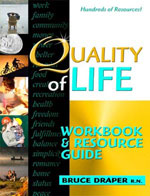
My reference guide and workbook which can be purchased from the link below.


Monday, January 27, 2014

Affluenza Alert!!

After watching some of the craziness around Black Friday and shopping last month, I wanted to put out a warning that this type of feeding frenzy isn't always so obviously doing harm to ourselves and others.

Some statistics you may or may not know:

1. The average American has 5 credit cards! (If they all have a $2000 limit, that's an easy $10,000 debt just in credit cards).

2. 41% of Americans have less than $500 in savings! And 2/3 of us say we're living paycheck to paycheck. (donkey credit.com)

3. Anxiety, depression and high blood pressure are all at all time highs. As a health professional this is the scariest statistic. It seems our health is suffering greatly because of willingness/need to go into debt. Much of the debt is for things we don't really NEED.

PBS put out a semi-humorous video on this topic several years ago. Here's a clip:

For some help with the disease, here are some recommendations:

Try these handy tips for beating Affluenza!


1. Before you buy, ask yourself:

  • Do I need it? 
  • Do I want to dust (dry-clean or otherwise maintain) it?
  • Could I borrow it from a friend, neighbor or family member?
  • Is there anything I already own that I could substitute for it?
  • Are the resources that went into it renewable, or non-renewable? 
  • How many hours will I have to work to pay for it? 

(Note: Before you do this, you may find it useful to figure your real hourly wage. Take your annual net income and subtract your work-related costs like clothing, transportation, child care, parking and lunches out.

2. Avoid the mall. Go hiking or play ball with the kids instead.


3. Figure out what public transportation can save you (time, money for gas and parking, peace of mind).


4. Become an advertising critic. Don't be sucked in by efforts to make you feel inadequate so you'll buy more stuff you don't need.


5. Volunteer for a school or community group.


6. Splurge consciously. A few luxuries can be delightful, and they don't have to be expensive.


7. Stay in -- have a potluck, play a game, bake bread, write a letter, cuddle a loved one.


8. Make a budget -- know how much you are earning and spending. Each dollar represents precious time in your life that you worked. Are you spending money in ways that fulfill you?


9. Pretend the Joneses are the thriftiest, least wasteful people on the block. Then try to keep up with them.


10. For even more ideas, watch Affluenza.


Saturday, November 9, 2013

In Praise of Slowness


Or : Chillin' With Sammy Sloth

In my September 6th Launch Day post, I wrote of a need to find time for stillness to do a quality of life assessment of the life quality that we have in our lives and to think about what kind of quality that we desire. If you've already done this, you probably find that in some way or another, your life needs to
slow down a bit to avoid distractions, decrease stress and allow you to focus on your QOL goals.

There are many nice resources out there to assist with the slowing down process. I like the book of the same title as this post: "In Praise Of Slowness," by Carl Honore, a Canadian journalist based in London. He has a unique perspective due to his having lived in both North America and Europe.

Chapters in his book cover slowness in working, eating, leisure, sex, raising children and more!

Some of his sad facts about our Culture of Speed:

  • "There is the human cost of turbo-capitalism. These days, we exist to serve the economy, rather than the other way around."
  • "It is no coincidence that the fastest nations are also the fattest. Up to a third of Americans and a fifth of Britons are now clinically obese. Even Japan is piling on the pounds. In 2002, a national nutritional survey found that a third of Japanese men over thirty were overweight." It seems we don't have time to eat right!
  • "By some estimates, the average American now puts in 350 hours more in the job per year than his European counterpart. In 1997, the US supplanted Japan as the industrialized country with the longest working hours."
  • "Inevitably, a life of hurry can become superficial. When we rush, we skim the surface, and fail to make real connections with the world and other people. All the things that bind us together and make life worth living --- community, family, friendship --- thrive on the one thing we never have enough of : time."

The good news is that help is already here in the form of some creative and fun groups that are working to take a slow is beautiful focus! The Japanese have started a Sloth Club which advocates less hurried, more environmentally friendly living. They are helping deceleration become hip in Japan. In Bra, Italy, a man named Carlo Petrini has started a group that has gone international as the antidote to fast food culture: Slow Food. He is sharing the notion that what we eat should be cultivated, cooked and consumed at a relaxed pace. And, believe it or not, with a sleep deprived world---adult napping is making a comeback(one of my favorite parts of being a parent!). We have a World Napping Organization and the Portuguese Association of Friends of the Siesta helping a mid-workday snooze become respectable. In the US, Yarde Metals has six factories where workers are encouraged to doze during breaks with special "nap rooms." I hope that these kind of things spread like wildfire with a little publicity and encouragement!!


Some links to great organizations to help with slowing down different aspects of life:

                     www.slowfoodusa.org


                     www.slowmoney.org


                     www.slowmovement.com


                     www.commondreams.org


                     www.sloth.gr.jp


Please let us all know of other good ones that you find!!

Let the SLOW TIMES ROLL.


Thursday, October 3, 2013

Life as a Daring Adventure

LIFE AS A DARING ADVENTURE

The humanist Helen Keller was blind from a childhood illness at 18 months of age, was heroically nurtured out of her introverted prison and became an inspiration to the world in the early 20th century. Even with this terrible start to life, she felt that "life is either a daring adventure or it is nothing." What an adventure it must have been for her to be raised as an animal and have someone in her life not accept this for her and encourage her to take on this challenge called life to live it to the fullest! (See the movie "The Miracle Worker").

For myself, I NEED a challenge. Though I have never had a challenge even close to Ms. Keller's, there have been many life challenges for me, both wanted and unwanted. Going into medicine was a challenge for me as it was a total career change for me after a undergrad study of Politics/Pre-Law. There were also about 3% males in nursing in the 80's and HIV/AIDS was a new and frightening disease when I confronted it in the ICU's of the SF Bay Area. With the help of friends and colleagues I worked through these challenges one by one. Nursing HAS been a daring adventure in so many ways!

People have different concepts of what an adventure is. Some adventurous thrill seekers need skydiving or scuba diving where for others, a vacation out of state is enough of a thrill/challenge. I think that life's daring adventure MUST have a regular chance for us to challenge ourselves to grow mentally, physically and spiritually. As Bob Dylan so famously sang: "He not busy being born is busy dying." Surely we are all on our way to life's FINAL adventure and if we don't take this life as an exciting, challenging experience then we aren't really living fully. I think this is the essence of what Helen Keller tried to pass along from her experience. 

So quality of life is in putting ourselves into situations where we can squeeze life's zest out of what we treasure most!! Take the time to look around you and think about what inspires you and challenges you to lead an extra-ordinary life. Work hard to include these things in your life. For me, I was driven to travel, to volunteer(at home and abroad), and to have a career that inspired me (ICU and ER medicine).  I encourage you to define your Daring Adventure as soon as possible and write it out and share it with loved ones and post it where you can see it daily. Get friends and family together to discuss the topic and help each other to define what a life well lived is. Your life and sanity may well depend on it!


Monday, September 16, 2013

We want to help one another!


"MANY HANDS MAKE LIGHT WORK /(LIFE)"


The Merck Family Fund did a nationwide survey at the end of the last century regarding quality of life. They found that the three things that people said would add more quality to there lives were:


1) More time with friends and family
2) Less stress
3) More time to contribute to community


Yesterday I read a quote that was written in the 1930's but is entirely relevant today. Poetic. Eloquent. And something we must all think about to guide us to life's NEXT step. We seem to have lost our way to having what we need regarding 1,2. and 3 above. The Merck study actually had people create a term for what they felt was going on in the USA and it was:"out of whack." What is going on in America today is out of whack. Obviously, we need to get BACK in whack!! (Whatever THAT is).


The following poetic message from Charlie Chaplin from the Great Dictator gives a positive insight to we human BEINGS and it seems that as early as the 1930's people of the world had lost their way:


"We all want to help one another, human beings are like that. We want to live by each other's happiness, not by each other's misery. We don't want to hate and despise one another. In this world there is room for everyone and the good earth is rich and can provide for everyone.The way of life can be free and beautiful. But we have lost the way. Greed has poisoned men's souls, has barricaded the world with hate; has goose-stepped us into misery and bloodshed.We have developed speed but we have shut ourselves in:machinery that gives abundance has left us in want.Our knowledge has made us cynical, our cleverness hard and unkind. We think too much and feel too little: More than machinery we need humanity; More than cleverness we need kindness and gentleness. Without these qualities, life will be violent and all will be lost."


Consider what QOL is for you and your family. Consider what leads to "kindness and gentleness" to those around us. What can we use our creativity and insight for to make the change to a sustainable and cooperative future that spans this magnificent globe!!? We'll talk about it here @ QOL News.

Friday, September 6, 2013

Quality of Life News - LAUNCH DAY

On Launch Day for Quality of Life News, I want to welcome all those who are looking for enhanced life quality!! On this site I want to explore the many ways that people around the world have found to slow down, reduce stress, spend more time with loved ones and be involved in their communities, find more joy and anything else that gives our lives more zest. 


So, lets get started....
First things first. Before we go rushing off too seek and capture the best that life has to offer, I believe some stillness is in order. If you don't already have some activity that helps you plug into your inner intuitive wisdom, it's time to find something. That should be your first exploration at ground level for enhanced QOL. 

"Stillness and tranquility set things in order in the universe"

                                                                        Tao Te Ching

I meditate regularly and run on the beach or mountain bike the woods as a way to drop stress and bring about an inner calm and 

help myself with reflection on what is most important in this highly distracting life around me. So it isn't always sitting still
that brings about some stillness in life. A nice brisk walk in a park
or an invigorating swim does the trick for some of my friends.

The key is giving yourself some time on a rest break or at the end of an activity to check out what author Barbara De Angelis speaks of so eloquently: "When you choose to be solitary and silent, you witness the thoughts, reactions and emotions that have been interfering with your ability to make clear decisions, or discover the answers to problems, or get to know what your true feelings are."


So, create some Sacred Time that happens at least several times a week--- 1/2 hour minimum. Don't let it be crowded out of your schedule!! It's sacred. Get to where you actually feel "centered." The Japanese call it the "hara," and it's the actual geographic center of the human body. Just below the navel. Get out of your head, concentrate on breathing slow and deep and attend to your "gut." 


In the future, I'll relay a story of how blocked MY gut was until I did some therapeutic Musical Guided Imagery. You'll find that when your gut, head and heart are all in alignment, you've found the Yellow Brick Road to QOL. For whatever reason, many of us have tuned out one or all of these parts of ourselves.


Happy trails to YOU......